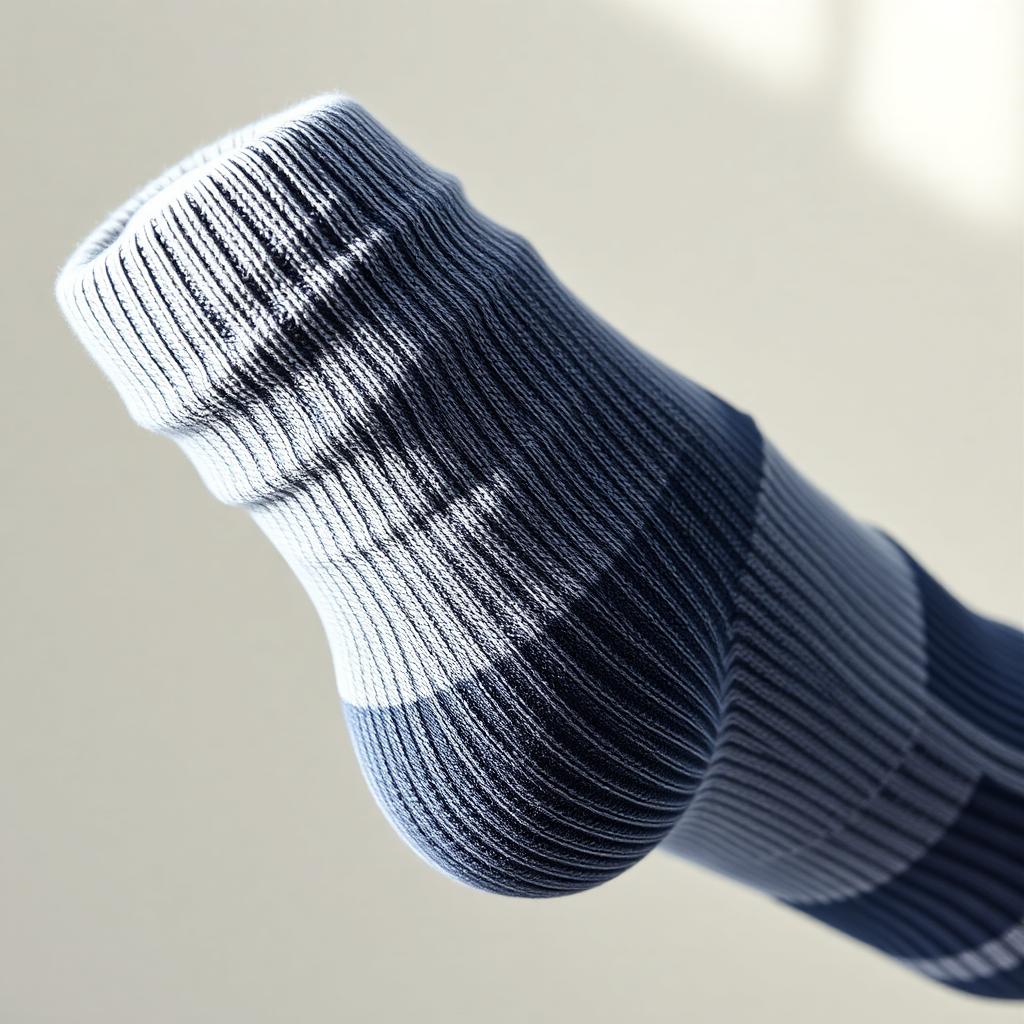
Custom Basketball Socks: Cushion, Arch Support and Branding
Zhang, Michelle
Senior Product Engineer · SocksCraftPro
Table Of Contents
Basketball socks fail in three predictable ways –heel cushion compresses flat by month two, arch bands lose elasticity after 25 washes, and sublimated team logos crack at the cuff fold. Each failure traces back to a single specification the buyer left blank in the tech pack.
For basketball clubs, school programs, and sports brands, custom basketball socks are simultaneously protective gear and the most visible piece of team kit on a televised court. A jersey is covered by an opponent's defender for most of the game; the socks are visible on every cut, jump, and free throw. This guide covers the cushion construction, arch-support engineering, and branding methods that determine whether your custom basketball socks last a full season or end up in the equipment-room reject bin.
Key Takeaway: For high-impact basketball use, specify 200-needle terry cushioning at the heel, forefoot, and Achilles, paired with a Y-heel construction and a 2.5 cm wide arch compression band knit with 12-15% spandex. Sublimated logos belong on the shaft, never across the cuff fold line. CustomSockCraft has validated this construction across 60+ team and brand programs since 2018.
What Buyers Need to Know
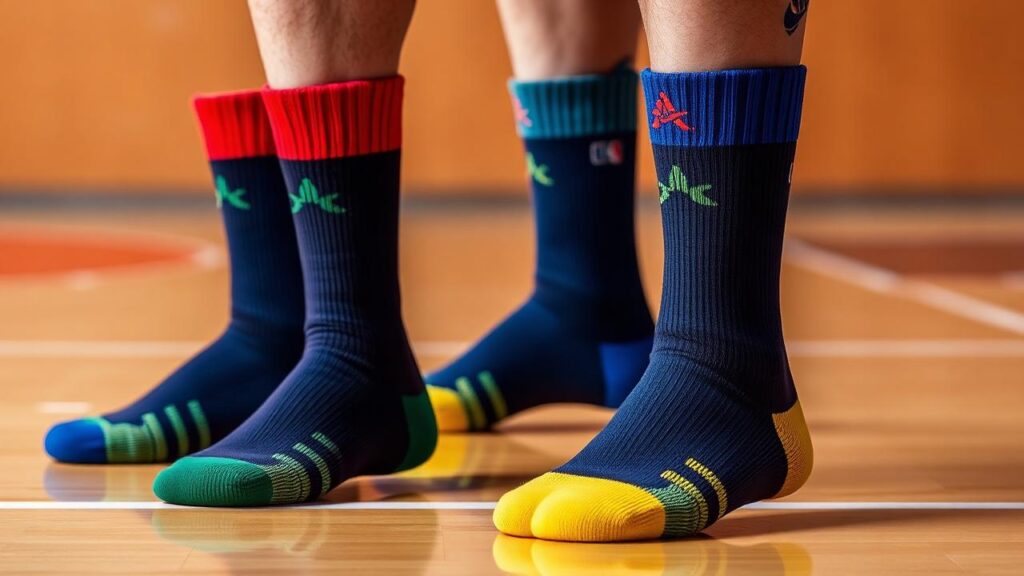
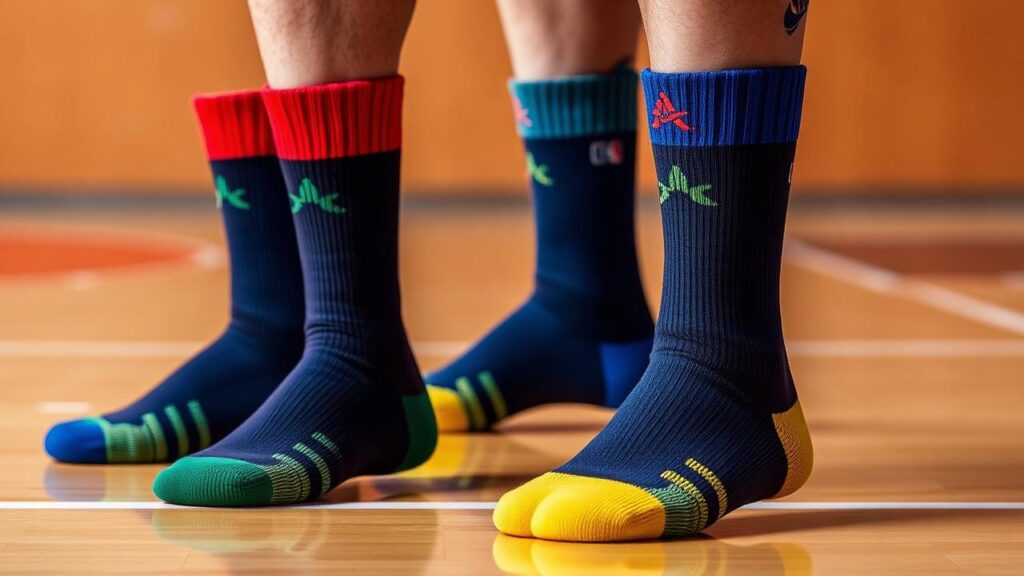
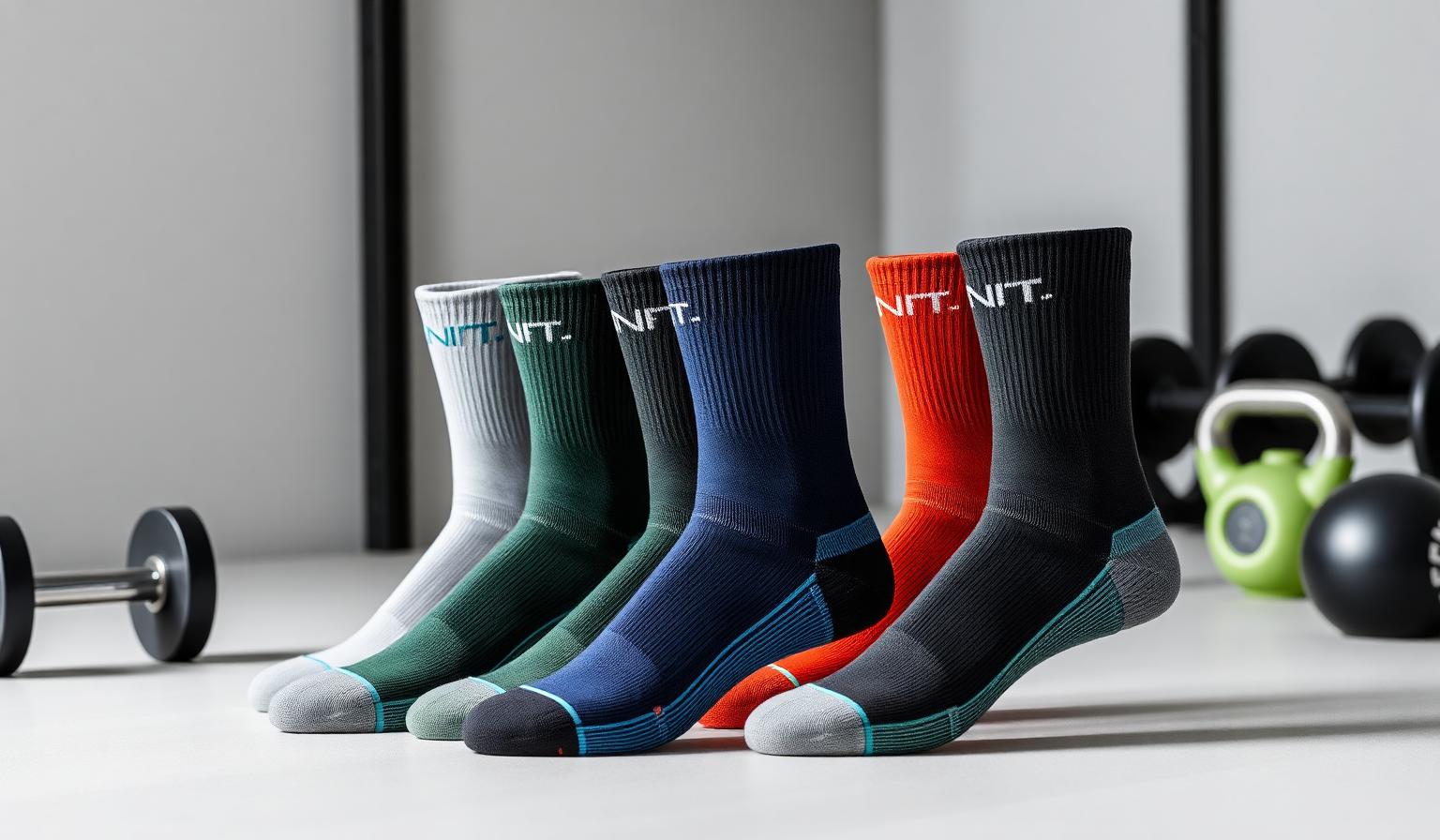
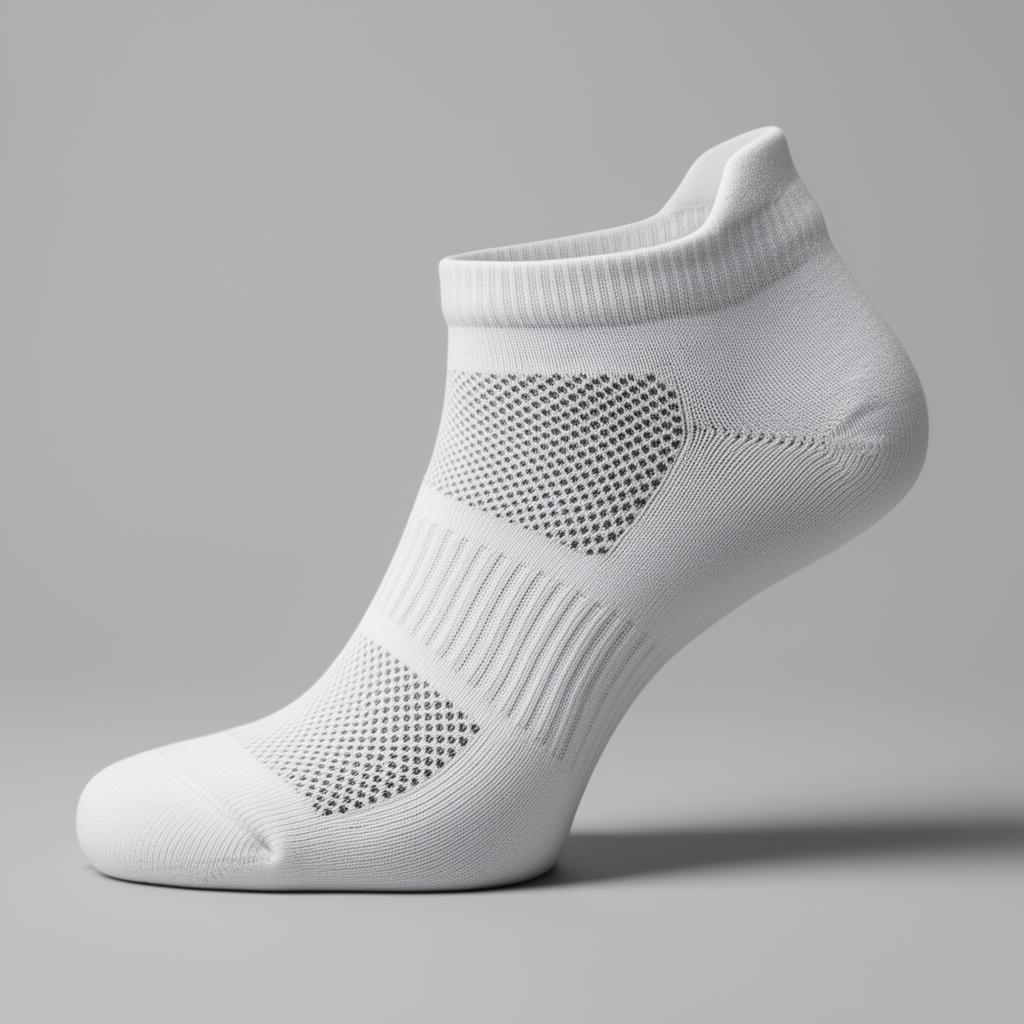
Custom basketball crew socks with team colors and woven logo, B2B product photography
Before issuing a tech pack, buyers should lock four specifications: cushion zones, arch support construction, sock height, and logo method. Getting any one of these wrong undermines the others.
Cushion Zones and Density
Basketball generates 4-7x bodyweight impact forces on each landing. Cushion zones must absorb load at the contact points without bulking up the midfoot. Standard zoning:
Heel pad: Full terry loop, 200-needle density, 4-5 mm uncompressed thickness. Protects the calcaneus on rebound landings.
Forefoot pad: Full terry loop under the metatarsals, 3-4 mm thickness. Cushions the takeoff on jump shots.
Achilles guard: Half-terry loop on the back of the ankle, 2-3 mm. Prevents shoe-collar abrasion.
Top of foot: Flat knit only. Adding cushion here causes lacing pressure points.
Specify terry density in needles per inch (NPI). 200 NPI gives a dense, springy pad. 150 NPI is softer and lighter –better for guards who prioritise court feel over impact absorption.
Arch Support Construction
The arch band is what separates a basketball sock from a tube sock. Two construction methods dominate:
Knit-in elastic band: Spandex-rich rib knit (12-15% elastane) integrated during knitting. Provides 8-12 mmHg compression across the midfoot. Adds zero thickness, no extra labour.
Bonded silicone band: A silicone strip applied to the interior arch after knitting. Provides anti-slip rather than compression. Used by brands that want a visible 'tech' feature.
For performance basketball, knit-in is the correct choice. Bonded silicone fails under repeated sweat exposure and adds $0.18-$0.25 per pair.
Sock Height for Court Play
Three heights cover 95% of basketball orders:
Crew (15-18 cm cuff): Standard for college and pro programs. Shoe collar fully covered, calf protected from court burns.
Mid-calf (20-23 cm cuff): Preferred for retro and streetwear-influenced brands. Adds 2-3 g per sock.
Quarter (10-12 cm cuff): Recreational and youth leagues. Less material, lower cost, less branding real estate.
Crew is the safest default. Mid-calf gives maximum logo visibility for televised play.
Logo Method and Placement
Branding choices interact with cushion and stretch. The cuff stretches 40-60% during pull-on; logos applied across the cuff fold crack and peel. Place logos on the shaft (between cuff and ankle), the side panel, or the toe wrap –never across the fold line. We cover method-specific tradeoffs in the comparison table below.
Best Materials and Construction
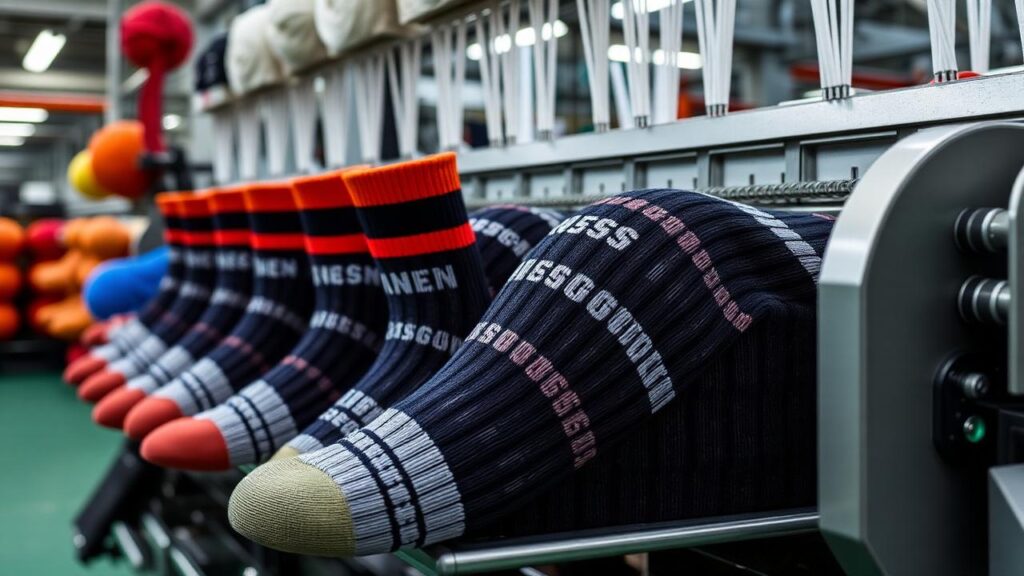
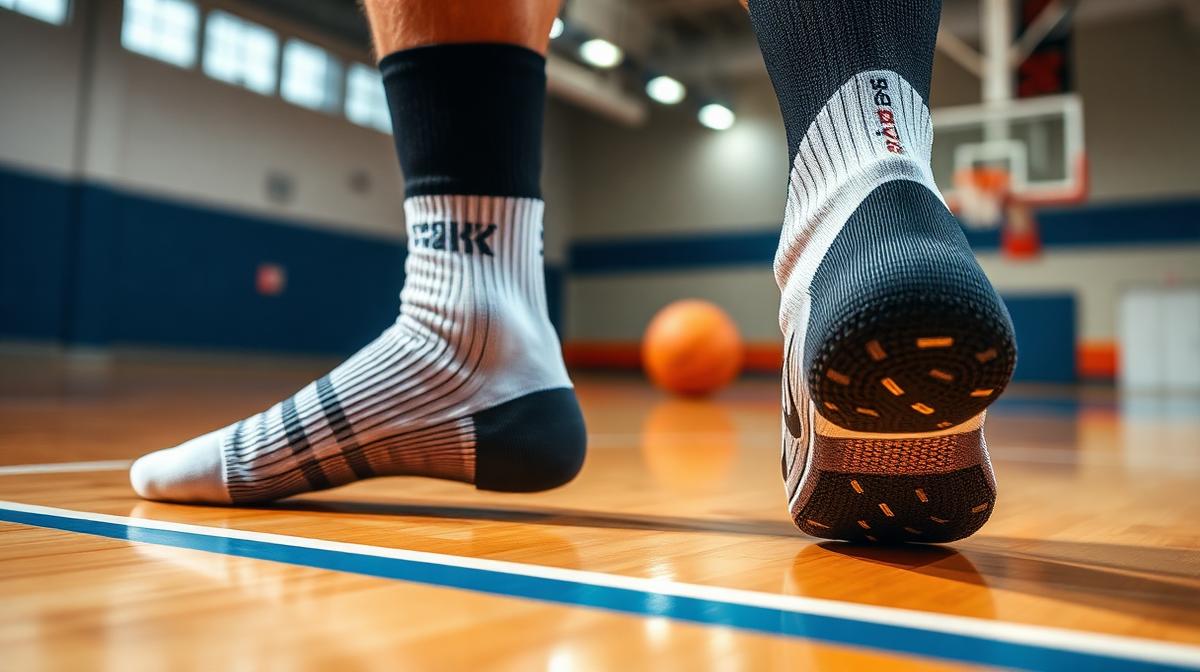
Basketball sock production on circular knitting machines with team-colour yarn cones
Yarn selection determines moisture management, durability, and how the cushion zones feel after 50 wash cycles. The table below compares the five constructions CustomSockCraft runs most often for basketball programs.
Construction
Composition
Cushion feel
Moisture wicking
Wash durability
Cost per pair (FOB)
Best for
Combed cotton blend
70% cotton, 25% nylon, 5% spandex
Soft, plush
Fair
50+ washes
$1.45-$1.85
School teams, training socks
Coolmax performance
65% Coolmax polyester, 30% nylon, 5% spandex
Springy, firm
Excellent
80+ washes
$1.70-$2.20
Competition, hot gyms
Combed cotton + Coolmax
50% cotton, 30% Coolmax, 15% nylon, 5% spandex
Balanced
Good
70+ washes
$1.60-$2.05
Pro and college programs
Merino-nylon blend
55% merino wool, 38% nylon, 7% spandex
Plush, temperature-regulating
Excellent
60+ washes
$2.40-$3.10
Premium retail, fall/winter leagues
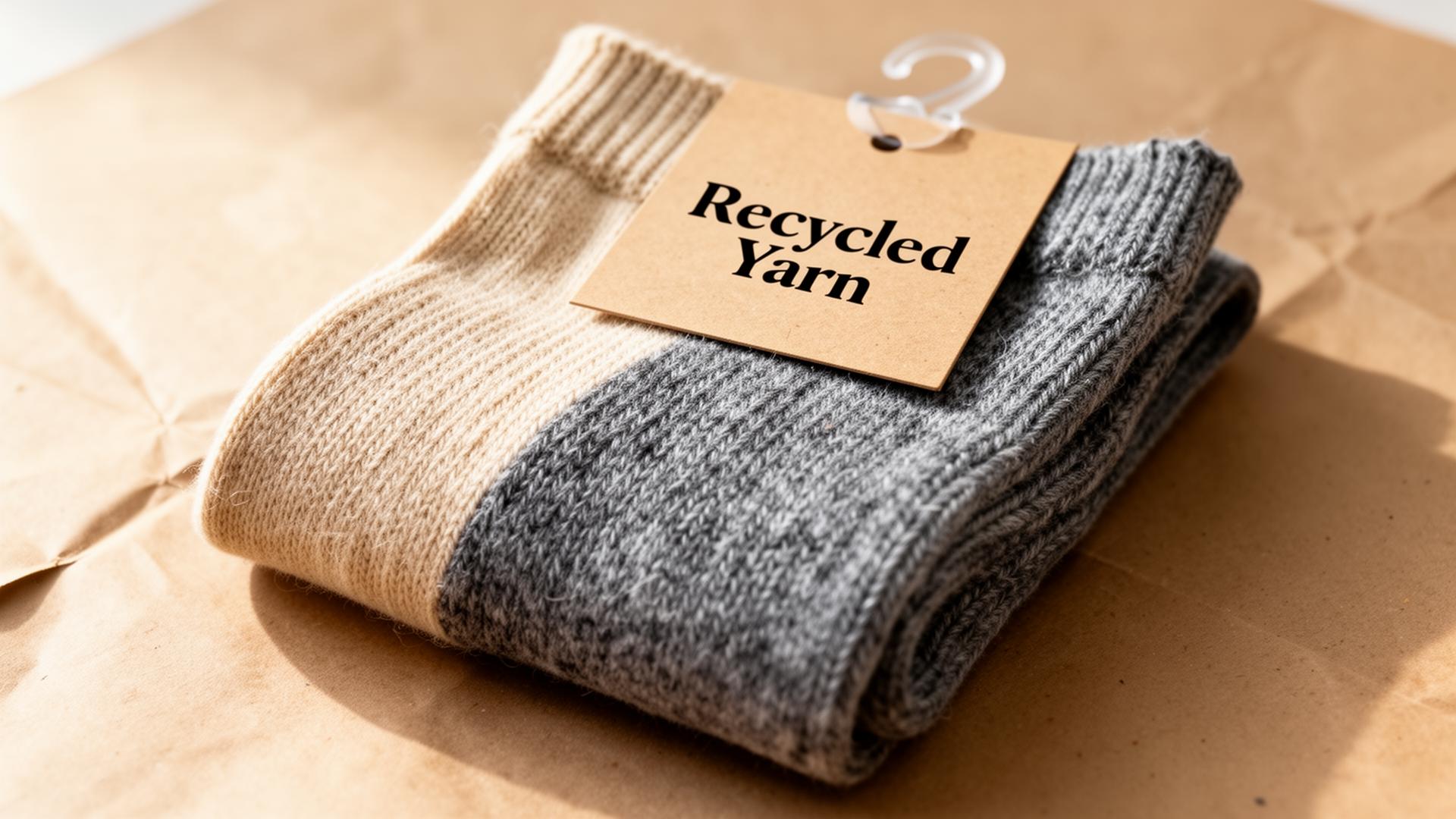
Recycled poly blend
60% rPET, 30% nylon, 5% Coolmax, 5% spandex
Springy
Good
75+ washes
$1.55-$1.95
Sustainability-led brands
Construction Details Buyers Should Specify
Needle count: 168N or 200N single-cylinder for competition socks. 200N produces a denser, more supportive fabric. 144N is acceptable for training and youth programs but feels thinner.
Y-heel construction: A Y-shaped knit at the heel cup that cradles the calcaneus and prevents heel slip inside the shoe. Adds 2-3 minutes per sock at the linking station; non-negotiable for performance use.
Seamless toe (Rosso linking): Eliminates the raised toe seam that causes blisters during quick lateral cuts. Standard on all CustomSockCraft basketball orders above 300 pairs.
Ribbed cuff with 8-10% spandex: Holds the cuff up through full-game wear. Lower spandex content sags by the third quarter.
Mesh ventilation panels: Knit on the top of foot and instep using a pointelle stitch. Reduces in-shoe temperature by 1-2°C in testing.
Reinforced toe and heel: Double-yarn feed in high-abrasion zones extends life by 30-40%.
Manufacturing Process and MOQ
CustomSockCraft produces custom basketball socks on a 28-35 day cycle from approved sample to shipped finished goods. The terry-cushion zones extend knitting time by 15-20% versus a flat-knit sock, which is the main driver of the longer lead time.
Step-by-Step Production Timeline
Tech pack and design confirmation (Days 1-3): Digital mockup covering cushion zones, arch band, sock height, logo placement, colour matches, and packaging. Revisions are free at this stage.
Yarn sourcing and dyeing (Days 4-7): Body yarn dyed to Pantone match. Coolmax and merino require 2 extra days because of mill scheduling.
Sample production (Days 8-14): Physical samples produced with full terry cushion, arch band, and logo. Standard sample lead time is 7-10 business days; sublimation samples add 2-3 days.
Sample approval and bulk yarn order (Days 15-16): Yarn is committed in bulk once you sign off.
Knitting, linking, and Y-heel forming (Days 17-26): Production runs on 168N or 200N machines. Terry zones and Y-heel slow the cycle to 90-110 pairs per machine per hour versus 140-160 for flat-knit.
Logo application (Days 27-29): Jacquard is already in-knit. Embroidery and sublimation are applied at this stage.
Steam boarding and washing (Days 30-31): Sets shape and pre-shrinks cotton blends.
AQL 2.5 QC and packaging (Days 32-35): Includes cushion-density check, arch-band stretch test, and logo durability inspection.
MOQ Breakdown
Body-knit MOQ: 200 pairs per design per colourway. At 200 pairs you can choose up to 3 body colours.
Sublimated logos (full-shaft print): 300 pairs minimum because the sublimation paper print run sets up in batches of 300.
Jacquard woven logos: 300 pairs with a one-time $90-$140 programming fee. Best per-pair cost above 1,000 pairs.
Embroidery logos: 200 pairs, no setup fee, max 7 thread colours.
Bonded heat-transfer logos: 200 pairs, suitable for small detailed marks but not recommended on cuff fold.
Custom yarn colour (Pantone match): 200 pairs for cotton, 500 pairs for Coolmax (mill minimum), 1,000 pairs for merino.
Packaging: 500 belly bands, 1,000 hang tags, 1,000 custom polybags. Stock unbranded polybags ship with any order.
For a first-time team order, the most cost-efficient configuration is 200 pairs, single body colour, jacquard or embroidered logo on the shaft, and stock polybag packaging. Landed FOB cost starts at approximately $1.65 per pair for cotton-blend construction.
Real-World Production Constraints
Sublimation only works on 100% polyester knit zones. If your sock is a cotton or merino blend, sublimated graphics will look washed-out and grey because the cotton fibres do not accept disperse dye. For cotton blends, use jacquard or embroidery instead.
Pantone matching has yarn limits. Fluorescent neons (Pantone 802C, 805C, 806C, 811C, 812C) cannot be matched in cotton –they require polyester base yarn. Specifying neon on a cotton sock will return a muted, dirty version of the colour.
Terry cushion adds thickness, not just softness. A 4 mm terry pad shifts the sock 3-4 mm thicker overall. If your team is sized to a specific shoe model, request a sample fitting in the actual game shoe before bulk approval –players who sized their shoes with thin training socks may need to go up half a size in cushioned game socks.
Logo colour count drives cost. Each additional embroidery colour adds $0.04-$0.06 per pair and 1 minute of machine time. Limit team logos to 4-5 colours for the best balance of visual impact and economics.
Cuff height tolerance: ±0.8 cm is the industry standard. If your spec is critical (e.g. matching league rules on visible sock height), specify the tolerance in writing.
Wash-test the team colour: Some Pantone reds and royals shed dye during the first three wash cycles. Always request a wash-test report for saturated colours before approving bulk.
Common Mistakes to Avoid
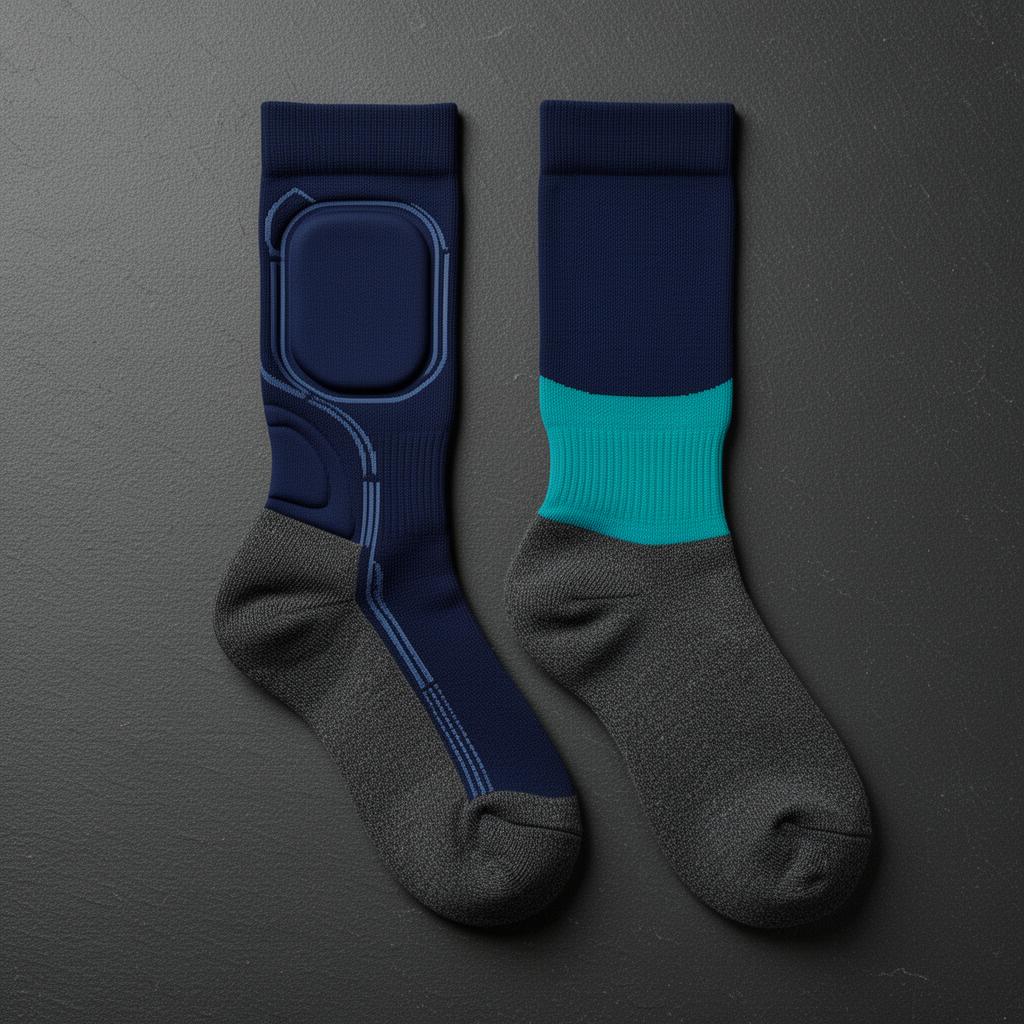
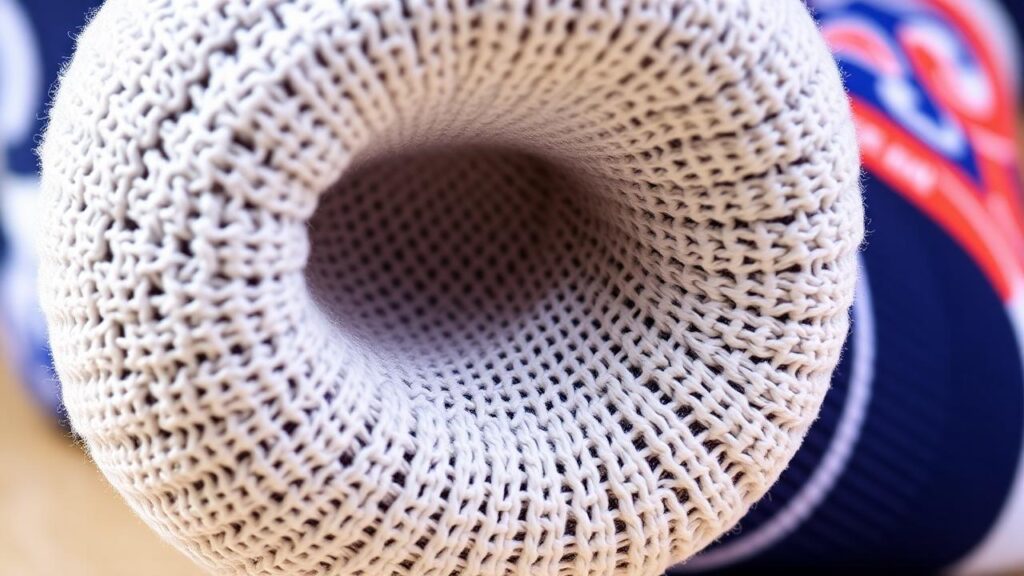
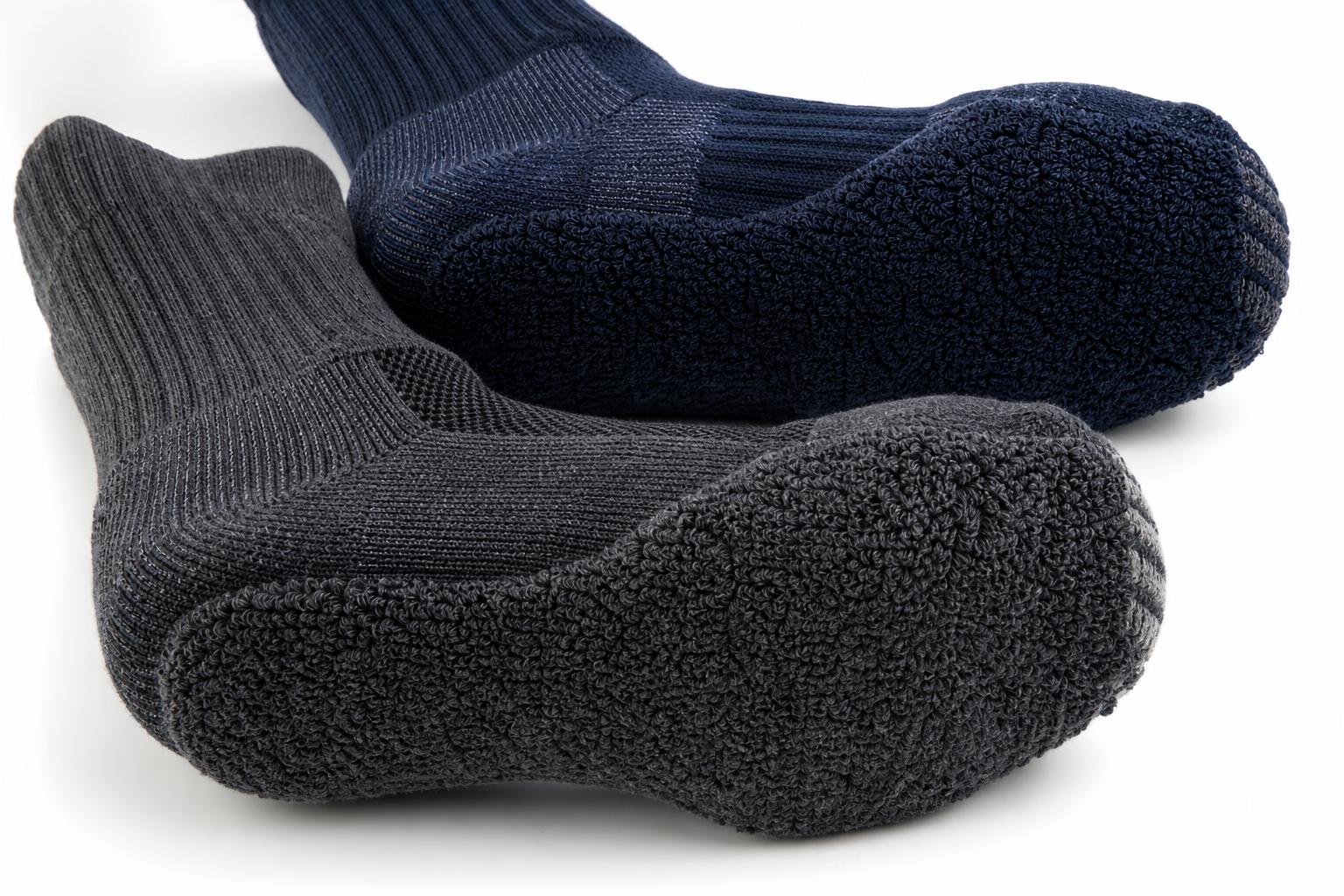
Close-up of basketball sock interior terry cushion and arch compression band
Across 60+ basketball programs, these are the specification errors that cause the most reorders, refunds, and frustrated equipment managers:
Placing the logo across the cuff fold: The cuff stretches 40-60% during pull-on. Any logo crossing the fold line cracks, peels, or distorts within 15-20 wears. Always place logos on the shaft (3-5 cm below the cuff), the side panel, or the toe wrap.
Specifying 'cushion' without zoning it: A sock cushioned across the entire foot bulks up the midfoot and causes lacing pressure. Cushion belongs at the heel, forefoot, and Achilles only. The top of foot must stay flat knit.
Choosing cotton for hot-gym programs: Cotton holds 7x its weight in sweat. For tournament play in non-air-conditioned gyms, this turns a comfortable sock into a wet, heavy liability by quarter three. Coolmax or Coolmax-cotton blends are the correct choice.
Ordering one size for the whole roster: A 12-player roster typically spans US men's 9-14 in shoe size. A single sock size will sag on guards and cut off circulation for centres. We recommend a two-size or three-size split (M, L, XL) starting at 250 pairs total.
Forgetting wash-care instructions on the hang tag: Polyester and merino need cold-wash, low-tumble care. Players default to hot wash and high heat, which destroys elasticity in 10-15 cycles. A printed care label on the inside cuff or hang tag preserves the product life.
Approving the sample without putting it in a shoe: A sock that looks great flat may bunch under the arch or slip at the heel inside a basketball shoe. Always wear-test the sample in the team's actual game shoe before sign-off.
Skipping the spandex spec at the cuff: Cuff sag is the #1 complaint from coaches. Specify 8-10% spandex at the cuff knit and 12-15% in the arch band, and the sock holds shape through a full season.
Why Work with CustomSockCraft
CustomSockCraft is a direct manufacturer in Dongguan, China, with 15+ years of B2B production for performance sports brands, college programs, and youth leagues. For basketball buyers, our advantage is integrated cushion engineering –we knit, cushion, and brand the sock under one roof with no third-party handoffs:
In-house terry cushioning: 168N and 200N single-cylinder machines tuned for variable-density terry. We can run different terry densities in the same sock (e.g. 200N at heel, 150N at forefoot) without re-mounting the work.
Low MOQ for teams: 200 pairs per design is enough for a varsity launch. Most factories require 500-1,000 pairs for terry-cushioned socks; our automated terry feed makes 200-pair runs economically viable.
Free design and tech-pack support: Send a logo and basic specs. Our design team returns a full tech pack with cushion zones, arch-band placement, and 3D renders within 48 hours.
Sample-first policy: Physical samples cost $50/pair with express shipping. Sample fee is credited toward the first bulk order of 500+ pairs.
Validated specs from 60+ programs: 200N terry at heel, Y-heel construction, 12-15% spandex arch band, 8-10% spandex cuff –these specs come from real team feedback, not catalogue defaults.
Multi-logo programs: Single production run can deliver three roster variants (home/away/alternate) with different logo colours, as long as body knit and construction match.
Retail-ready packaging: Belly bands, header cards, custom polybags with team or brand barcode. Multi-pair gift sets assembled on request.
AQL 2.5 QC with cushion and stretch testing: Every batch includes a terry-density gauge check, arch-band elongation test (must recover within 5% after 100 stretch cycles), and logo abrasion test.
What is the minimum order quantity for custom basketball socks with team branding?
The minimum order quantity for custom basketball socks is 200 pairs per design and colourway. This includes body knitting in your chosen colour, terry cushion zones at heel and forefoot, a knit-in arch band, and embroidery of your team logo up to 9 mm height. Jacquard woven logos and sublimated full-shaft graphics require 300 pairs because of programming and print-batch setup. Sublimation also requires a 100% polyester or Coolmax knit base –it does not work on cotton or merino blends. For a typical varsity team, 200 pairs in one colour with an embroidered logo lands FOB Shenzhen at approximately $1.65-$1.95 per pair depending on yarn.
How thick should the heel and forefoot cushion be on a basketball sock?
For high-impact basketball use, specify a 4-5 mm uncompressed terry pad at the heel and 3-4 mm at the forefoot, knit at 200 needles per inch density. This absorbs the 4-7x bodyweight landing forces generated during rebounds and jump shots without bulking up the midfoot. The Achilles guard should be a half-terry loop at 2-3 mm to prevent shoe-collar abrasion. The top of the foot should remain flat knit –adding cushion there causes lacing pressure points that distract players during games. For training and youth programs, 150 NPI terry is acceptable and lowers cost by approximately $0.10-$0.15 per pair.
Which yarn works best for basketball played in hot, non-air-conditioned gyms?
Coolmax polyester or a Coolmax-cotton blend is the correct choice for hot-gym basketball. Cotton alone holds up to 7x its weight in sweat, which turns the sock heavy and waterlogged by the third quarter. Coolmax wicks moisture to the fabric surface where it evaporates, keeping the foot drier and reducing blister risk. Our recommended blend for tournament play is 50% combed cotton, 30% Coolmax polyester, 15% nylon, and 5% spandex –this balances the soft hand-feel of cotton with the moisture management of Coolmax. For pure-performance competition, an 80% Coolmax construction with 15% nylon and 5% spandex is the most technical option and lasts 80+ wash cycles.
Can sublimated team logos and gradient graphics be printed on custom basketball socks?
Yes, but only on 100% polyester or Coolmax-base socks. Dye-sublimation chemistry requires polyester fibres to bond –cotton, merino, and bamboo will absorb the dye as a dull, washed-out tone. For full-shaft sublimated graphics, gradient prints, photographic images, or large multi-colour logos, specify a Coolmax or recycled polyester base at 300+ pair MOQ. Sublimation prints have no thickness, no peeling risk, and unlimited colours –but they must stay below the cuff fold line because the cuff stretches 40-60% during pull-on and distorts the image. For cotton-based programs that need similar visual impact, jacquard weaving is the alternative: limited to 6-8 yarn colours but woven directly into the knit.
What quality control tests are run on custom basketball socks before shipment?
Every batch undergoes AQL 2.5 inspection covering dimensional accuracy, cushion density, arch-band elasticity, and logo durability. The cushion check uses a thickness gauge at five points on the heel and forefoot pads; tolerance is ±0.3 mm from the approved sample. The arch-band test stretches the band 100 times to 150% of resting length and confirms recovery within 5% –a sock that fails this test will sag at the midfoot during a game. Logos are abrasion-tested on a Martindale machine for 500 cycles. A wash-test is run on 3 pairs through 10 cold-wash cycles to verify dimensional stability and colour fastness. A full QC report with photographs ships with every order. Failed units are replaced at no cost.
Share this article:
Ready to Get Started?
Free consultation + sample kit for qualified B2B buyers.